In white or colourless diamonds, colour is universally graded using an alphabetical scale from D to Z with D being the highest grade.
Before the GIA colour grading system was universally accepted, various other systems were used including letters of the alphabet starting at A, B and C with multiple A’s used to grade the best stones, number systems and Roman numerals and the result of all of these grading systems was confusion and inaccuracy and so, to make a fresh start and to avoid any association with previous systems it was decided to us D as the highest grade.
The grader will assess the colour of the diamond using a master set of diamonds of each colour grade. Without comparing diamonds side by side it is very difficult to see the difference between a D colour and a G colour stone.
Stones graded D,E,F are described as colourless, G,H,I,J are near colourless, K,L,M are faint.
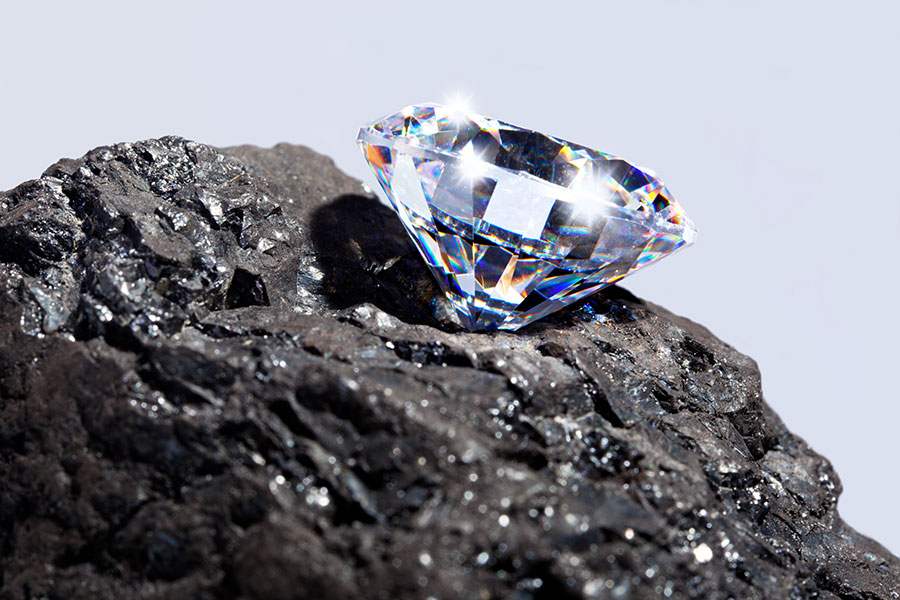 In white or colourless diamonds, colour is universally graded using an alphabetical scale from D to z with D being the highest grade.
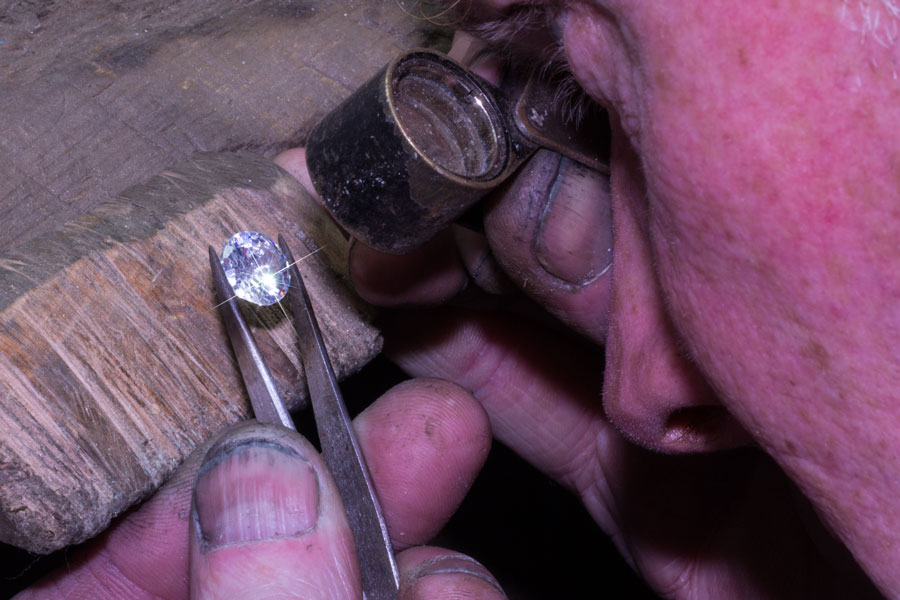 Diamonds and other gemstones are weighed in metric carats. One carat is 0.2 grams and a carat is split further into 100 points (a diamond weighing 50 points is a half carat diamond).
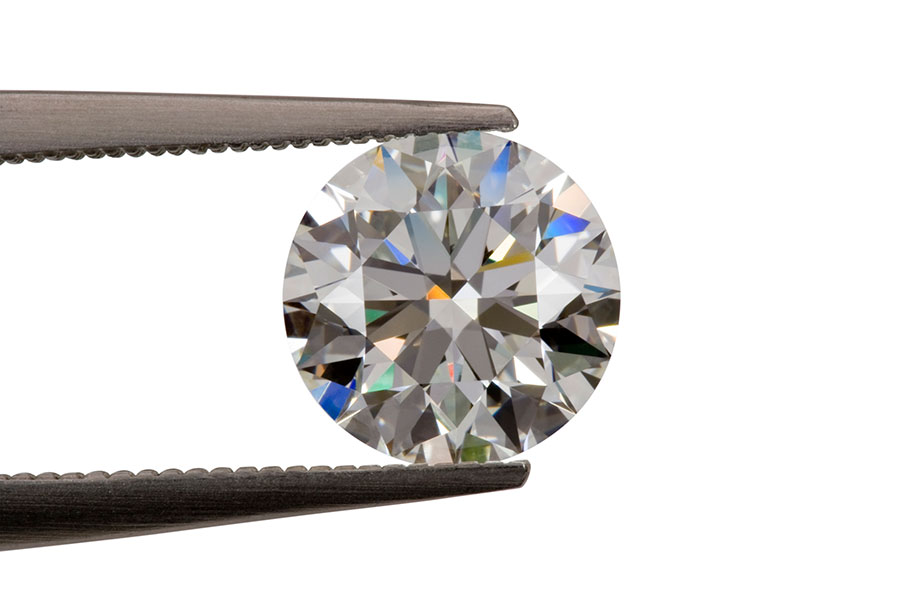 The quality of the cut of a diamond is important, because it dictates a diamond’s fire, sparkle and brilliance. A standard round brilliant cut will have 57 facets and how these facets relate to each other will determine how the light will pass through the diamond. The scale for the quality of the cut goes through Excellent, being the highest grade, Very good, Good, Fair or Poor.
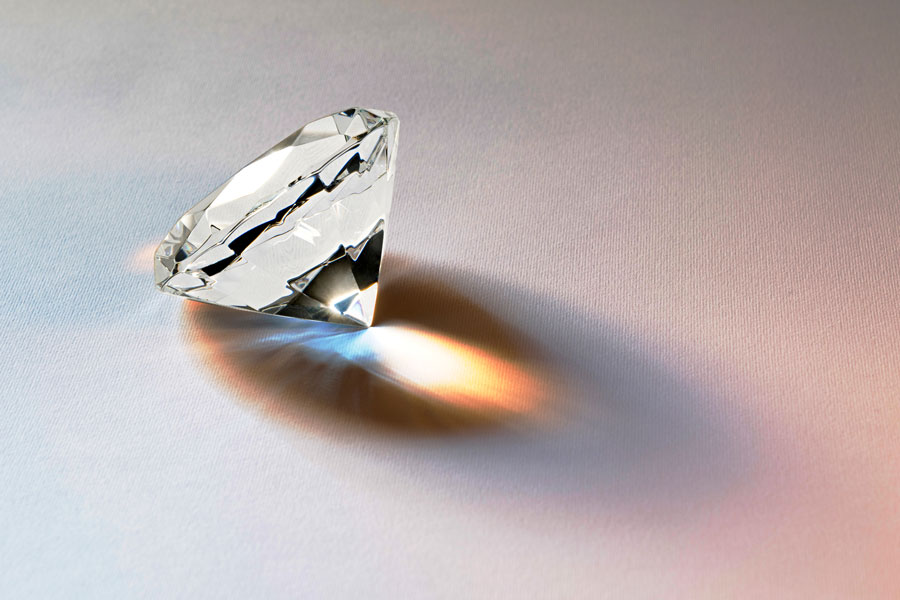 Diamonds are formed under extreme heat and pressure deep inside the earth and often display internal inclusions or external blemishes.